Biography
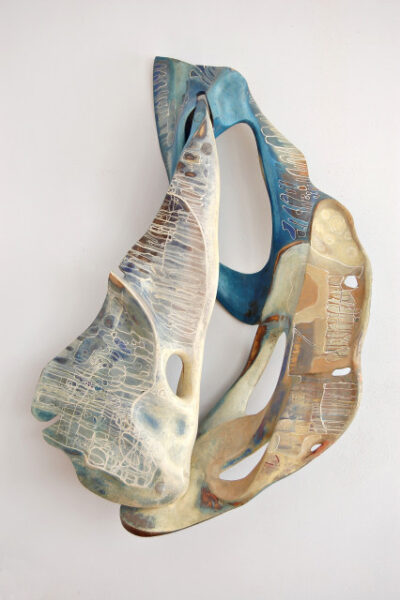
Mykola Ivanovych Mazur (1948, Kushchivskyi state farm, Krasnodar Krai, russia – 2015, Khmelnytskyi) – painter, monumentalist, graphic artist, sculptor, museum exhibition designer, educator. Wife – artist Liudmyla Mazur, son – People’s Artist of Ukraine, sculptor Bohdan Mazur, daughter – artist and art critic Oksana Mazur.
1968 – graduated from the Odesa Art School named after M. Grekov.
1968 – 1979 – worked at the Children’s Art School, Khmelnytskyi;
From 1973 – director. From 1972 – participant in regional, national, and international exhibitions.
1986 – 1992 – member of the architectural group for the reconstruction of the premises of the Khmelnytskyi Regional Art Museum.
From 1987 – member of the National Union of Artists of Ukraine.
1992 – head of the Khmelnytskyi branch of the National Union of Artists of Ukraine.
1996 – Honored Artist of Ukraine.
From 2000 – a public competition for the Liudmyla Mazur Prize has been held;
since 2015, it acquired the status of the Liudmyla Mazur “Podilian Palette” Regional Children’s Competition of Young Artists, and since 2016 – named after Liudmyla and Mykola Mazur (the Khmelnytskyi Regional Art Museum, supported by the Khmelnytskyi Regional Council).
2002 – 2011 – worked at the Khmelnytskyi National University at the Department of Design.
2007 – Order “For Merit” 3rd Class.
2008 – People’s Artist of Ukraine; author of the concept and chief designer of the exhibition dedicated to the memory of the victims of the 1932–33 Holodomor in Ukraine at the Mezhybizh State Historical and Cultural Reserve (Khmelnytskyi Oblast).
2009 – author of the sculptural group Hetmans. Prayer for Ukraine, Baturyn, Chernihiv Oblast (together with Bohdan Mazur).
2022 – 2023 – large-scale retrospective exhibition of Liudmyla and Mykola Mazur Inspired (curators – Olena Mykhailovska and Oksana Mazur) at the Khmelnytskyi Regional Art Museum. Honorary Citizen of the City of Khmelnytskyi.
Lived and worked in Khmelnytskyi.
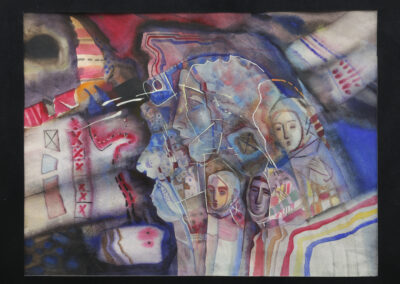
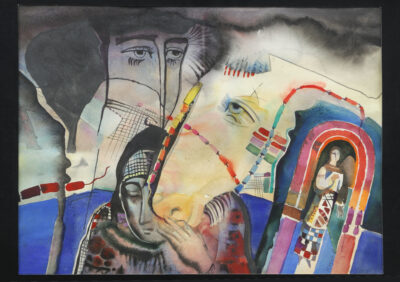
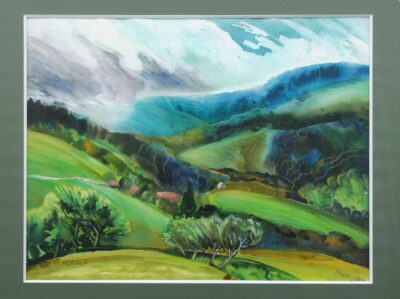
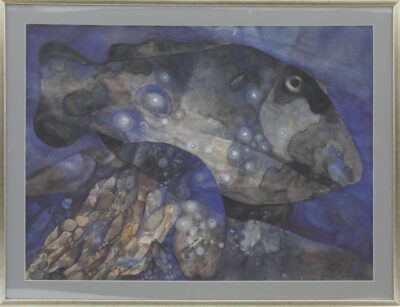
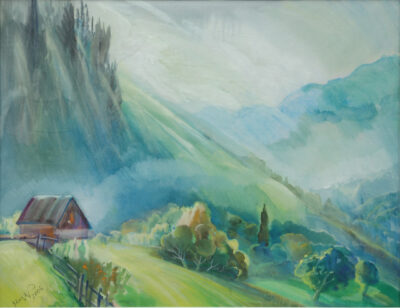
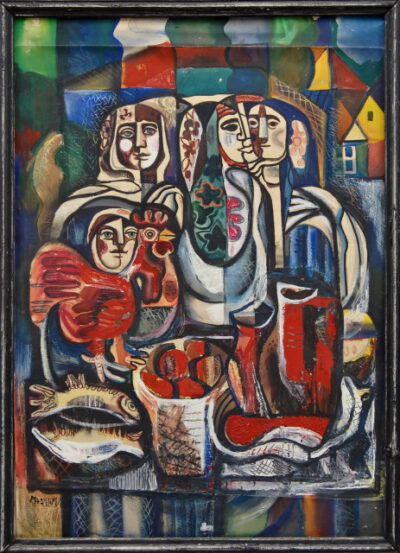
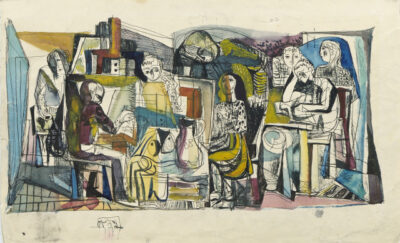
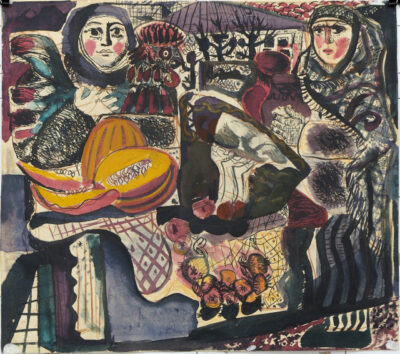
“Mazur possessed a Renaissance gift of universalism. In easel painting, the artist’s figurative and plastic language synthetically combined European plastic culture and folk art. The author turns to themes from the history of Ukraine, creates the image of the Ukrainian woman and native Podilia, going beyond the boundaries of a specific genre. After all, Mazur’s works are image-paintings, feeling-paintings that convey the inner world of the artist, who is filled with love for Ukrainian folklore, folk art, and his native land. Easel works sound monumental, which is not surprising, given that the artist has a significant body of work in the field of monumental art, which today has become a visual hallmark of Khmelnytskyi. The events of the 2014 Maidan manifested in the artist’s emotional graphic works imbued with incredible dynamics,” writes art critic Olha Sobokovych.
Researcher of Mykola Mazur’s work, his daughter and art critic Oksana Mazur notes: “Towards the end of the 1980s, a stage of deep comprehension of social phenomena begins, along with an awareness of the artist’s role in society and the continued formation of an artistic language to express one’s own ideas. The content transformation of the works occurs through the transition from painting as a means of conveying emotions, impressions, and feelings to painting as a narrative about complex experiences, reflections on existential challenges and philosophical issues. The paintings of that time are reactions to social and historical events, reflections on personal self-awareness, an understanding of history derived from literature, mythology, and religion; their totality forms a cohesive narrative.”
A meticulous analysis of compositional and coloristic techniques and the elaboration of the imagery led to the invention of a personal artistic language through which the artist transmits his own and societal states of that time. With a dramatic palette built on contrasts and a syncretic figurative system, the author eloquently speaks about tragic events that must be remembered, yet changing or turning back time is impossible. Among such global tragedies of the Ukrainian people are wars, Holodomors, repressions, and the Chornobyl disaster. The synthesis of images and meanings (when, in addition to the main motif, the artist uses several more meaningful lines on the canvas) makes it possible to expand the boundaries of both interpretation and historical context.