Biography
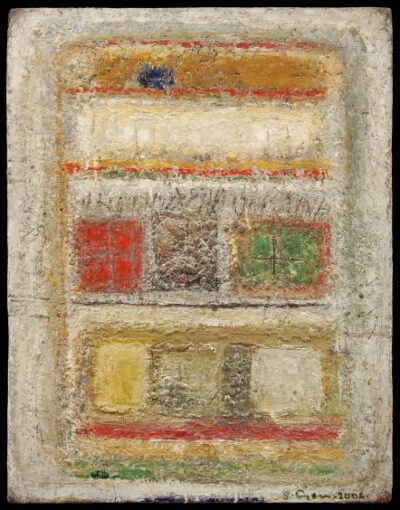
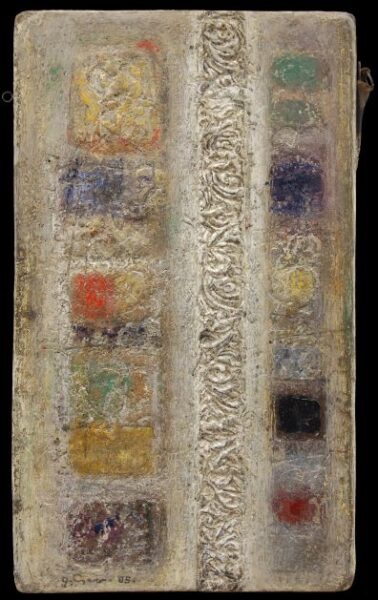
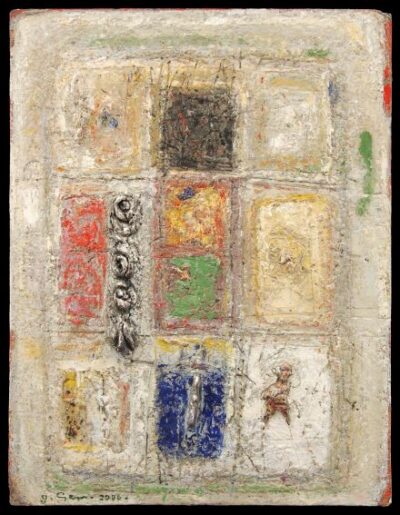
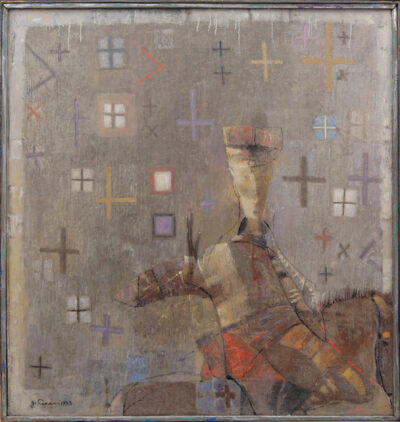
Dmytro Hryhorovych Stetsko (1943, Polonna village, present-day Poland – 2017, Ternopil) was a painter, graphic artist, and sculptor.
From 1973 – Lived in Ternopil.
1971 – Graduated from the Ivan Trush Lviv School of Applied and Decorative Arts; since then, a participant in numerous national and international exhibitions.
1971–2003 – Worked as an artist at the Ternopil Art and Production Works.
From 2003 – Dedicated himself fully to independent creative practice.
1990 – Member of the National Union of Artists of Ukraine.
1990 – Organizer and the first head of the Khoruhva [Gonfalon] artists’ group in Ternopil.
1992–1995 – Member of the editorial board of the journal Obrazotvorche Mystetstvo [Fine Art].
1993 – Voluntarily resigned from the National Union of Artists of Ukraine.
Lived and worked in Ternopil.
“I know how to look at myself from the outside. I am no stranger to the agonies of creation, in which there is no romanticism. When I sit at the easel, I forget everything bad. In my essence, I am an eternal moralist… Every artist is stirred by something: one by the wild passion of love, another by alcohol, a third by something else. I, for example, could never live abroad because there are no real problems there. I have had them all my life, and they became my norm. Without suffering and without creative searching, art cannot exist! Sometimes it seems that a divine power guides my hand, which is why I constantly thank the Almighty for everything created and born… Art, like talent, life, and destiny, is a great mystery,” reflected Dmytro Stetsko on art.
A talented painter and sculptor, Dmytro Stetsko was convinced that works of art are not intended merely for aesthetic contemplation, but must carry an intellectual and philosophical weight. He rejected opportunism, awards, distinctions, and regalia, and could not tolerate primitivism or performative patriotism. On two occasions, there were attempts to nominate him for the Taras Shevchenko National Prize, but he consistently declined.
For a still life depicting a crumpled Soviet newspaper on cracked earth alongside bare footprints, he was stripped of his studio. During the Soviet era, his work did not fit within the boundaries of the only officially recognized method—Socialist Realism. Dmytro Stetsko’s creations are a unique synthesis of national culture and contemporary artistic exploration.
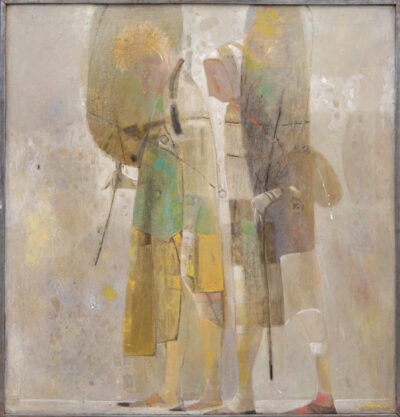
The painting We Were Bound to the Tree [My z derevom pov’yazani buly] (canvas, oil, 1993, acquired for the Khmelnytskyi Regional Art Museum collection from the author in 2007) is perceived like a fresco. In some striking way, the artist evokes a dual feeling within us. On the one hand, their bowed heads suggest that it is difficult for both the woman and the man to carry the trees. On the other, they hold them so effortlessly in their hands—as if these were not trees at all, but, say, a good fortune. The man’s “dandelion-style” haircut, somewhat childlike pouting faces, and warm pastel colors set a lyrical and simultaneously lighthearted mood. Or perhaps these are tree-people? Look at how firmly they stand on the ground, as though rooted into it. As for the painterly language, the imagery is planar, generalized, and devoid of superfluous detail, allowing one to speak of the artist’s personal interpretation of the principles of the Boichuk school.